Subscribe To Our Newsletter
Lorem ipsum dolor sit amet consectetur adipisicing elit. Nesciunt, reprehenderit!

Agriculture
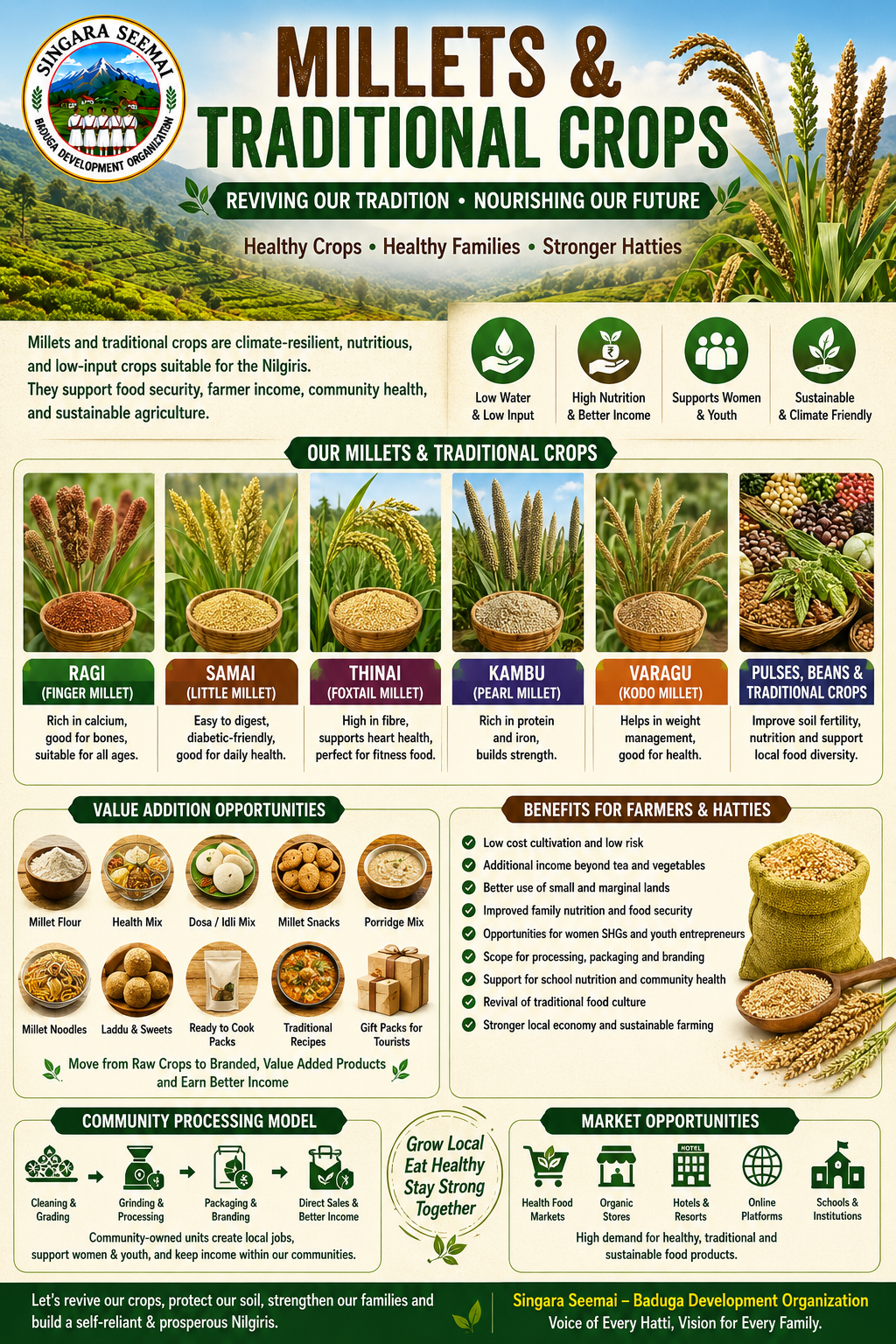
Millets and traditional crops are healthy, climate-resilient, low-input, and suitable for sustainable farming models in the Nilgiris. Reviving traditional crops can support food security, farmer income, community health, women entrepreneurship, and value-added business opportunities.
In the past, many communities depended on traditional grains and local food crops. Over time, tea and commercial crops became dominant, and many traditional food systems were reduced. Bringing back millets and traditional crops can help the Nilgiris build a healthier and more self-reliant agricultural future.
Ragi / Finger Millet – Highly nutritious, suitable for flour, malt, porridge, health mixes, and bakery products.
Samai / Little Millet – Good for traditional food, diabetic-friendly diets, ready-to-cook products, and millet rice packs.
Thinai / Foxtail Millet – Suitable for health food products, breakfast mixes, snacks, and traditional recipes.
Kambu / Pearl Millet – Rich in nutrition and suitable for flour, porridge, malt, and health-based food products.
Varagu / Kodo Millet – Useful for millet rice, flour, idli/dosa mix, and health food markets.
Traditional Pulses and Beans – Can support soil fertility, nutrition, and local food diversity.
Local Root Crops and Vegetables – Suitable for household food security, local markets, and value-added products.
Millets require less water, can grow with lower input cost, and are suitable for small and marginal farmers. They are also rich in fibre, minerals, and nutrients, making them useful for community health and nutrition.
Millets can support both farming income and healthy food habits among children, youth, and families.
Farmers and women SHGs can produce:
A small community-owned millet processing unit can support cleaning, grading, grinding, flour making, packaging, branding, and direct sales. This can create local employment and help farmers move from raw crop selling to value-added millet business.
Millet products have demand in health food markets, organic stores, schools, hostels, hotels, resorts, tourist outlets, online platforms, and urban consumers. With proper branding, Nilgiris millets can be promoted as healthy hill-grown traditional food products.
To revive millets and traditional crops as a healthy, sustainable, and income-generating farming model for the Nilgiris.
Lorem ipsum dolor sit amet consectetur adipisicing elit. Nesciunt, reprehenderit!